Position and Balance
Stance, guard, and balance create a dependable starting point. They help a trainee move without crossing the feet, overreaching, or losing position after punching.
About the training business
RingCenTraining provides structured boxing instruction for beginners, recreational trainees, fitness clients, and people refining existing skills at 2900 Bedford Ave in Brooklyn, New York.
Purposeful instruction
RingCenTraining approaches boxing as a combination of technique, movement, repetition, conditioning, and practical instruction.
A session is not simply time spent hitting a heavy bag or completing a generic fitness circuit. Boxing movements work together: stance supports balance, balance supports clean punch mechanics, and footwork creates the distance needed to attack or defend. Training gives those relationships a clear place in each round.
Depending on the session, participants may practice guard position, punch paths, combinations, defensive movement, bag work, or mitt work. Conditioning can support the work, but effort does not replace technique. The aim is to make each drill understandable and appropriate to the trainee's current level.
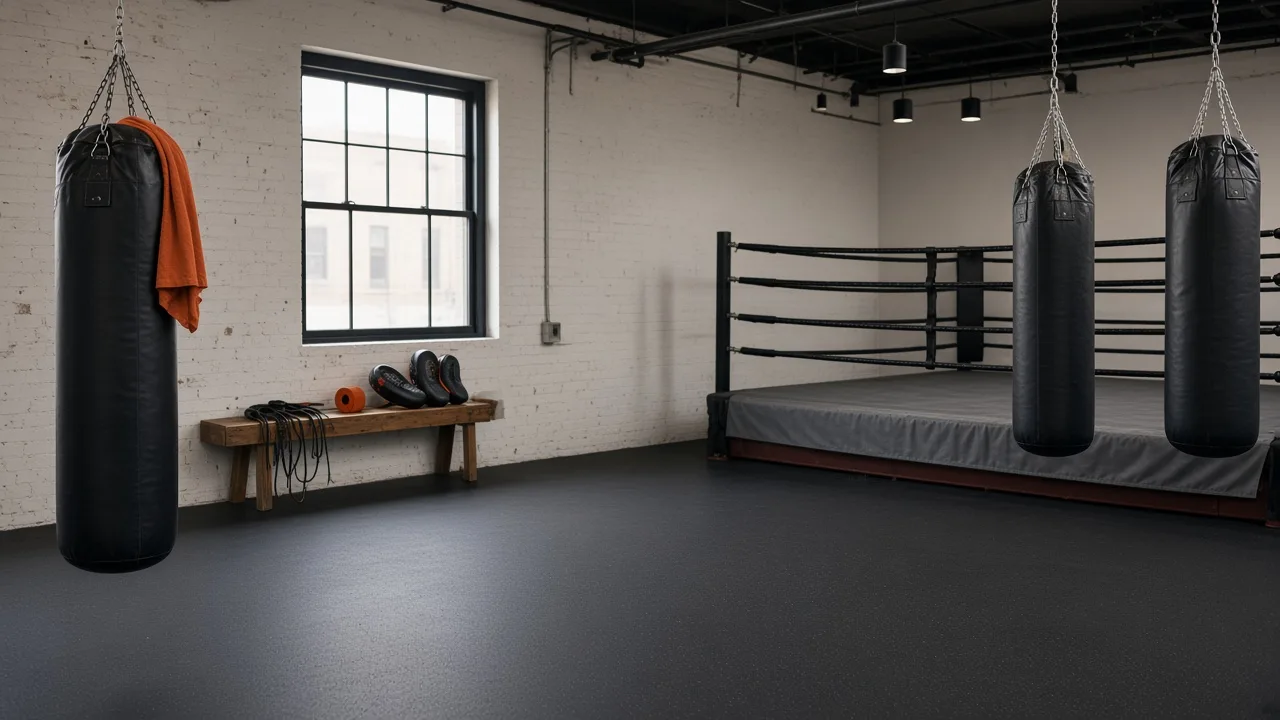
Skills that connect
Fundamentals remain useful at every experience level because they affect what happens before, during, and after a punch. A stable stance and organized guard make it easier to move, maintain distance, defend, and finish combinations in position.
Stance, guard, and balance create a dependable starting point. They help a trainee move without crossing the feet, overreaching, or losing position after punching.
Individual punches are practiced with attention to alignment, rotation, weight transfer, and the return to guard rather than speed or power alone.
Footwork, distance, blocks, slips, rolls, and exits are connected to offense so a combination does not end with the trainee out of position.
Progression can begin with one movement, add a second action, and eventually connect punches, footwork, and defense into more complete boxing sequences. Bag and mitt rounds provide different ways to repeat those sequences without promising a particular performance result.
Someone entering a boxing gym for the first time needs a different starting point from someone who already understands stance and basic punches. RingCenTraining uses the same core principles while adjusting the complexity, pace, and amount of feedback.
First-time beginners can learn terminology, stance, guard, movement, and basic punches without being expected to arrive in boxing condition. Recreational trainees can build a consistent practice around technique, bag rounds, and combinations. People interested in boxing fitness can work through boxing-based conditioning while still receiving technical instruction.
Trainees with previous experience may use technique-focused training to examine mechanics, distance, defensive movement, or recurring habits. People who want concentrated feedback can request individual work instead of relying only on a class-wide plan.
Private boxing training allows the session to stay centered on one participant's movement, questions, and priorities. The related one-on-one coaching program explains how observation and feedback can carry from one session into the next.
Group boxing training uses a shared plan, coached rounds, and drills that participants can adapt to their experience. Boxing fitness sessions emphasize sustained movement and conditioning through boxing skills, while technique sessions spend more time on mechanics, distance, defense, and controlled repetition. Each format has a different purpose; one does not replace every benefit of the others.
A clear sequence
Sessions follow an instructional sequence instead of a random collection of exercises. The exact plan changes with the training format and the people taking part.
The coach identifies the skill and explains what the trainee is trying to accomplish.
A movement or drill is shown clearly, including the starting position and important details.
The trainee repeats the movement under control and receives corrections that can be applied on the next repetition.
Skills are connected through combinations, bag work, mitt work, movement drills, or conditioning where appropriate.
This sequence is practical rather than proprietary. Some skills need to be separated and slowed down; others become useful only when they are combined and practiced through complete rounds.
RingCenTraining may accept trainees from age 8 when the format is appropriate. Training for younger participants uses age-appropriate instruction, controlled practice, and parent or legal guardian involvement. Required registration, consent, and waiver documentation for minors must be completed or approved by a parent or legal guardian.
Adults can request beginner, private, group, technique, or boxing-fitness training according to availability. There is no arbitrary maximum adult age, but the training format and intensity should fit the participant's experience and physical capacity. The training FAQ summarizes age groups, equipment, physical-activity considerations, and booking requirements; the Terms of Use provide additional participation information.
Business and contact hours are Monday–Friday, 7:00 AM–9:00 PM; Saturday, 8:00 AM–5:00 PM; and Sunday, 9:00 AM–3:00 PM. These hours do not mean every training format is continuously available. Review the weekly training schedule and request a time before arriving.
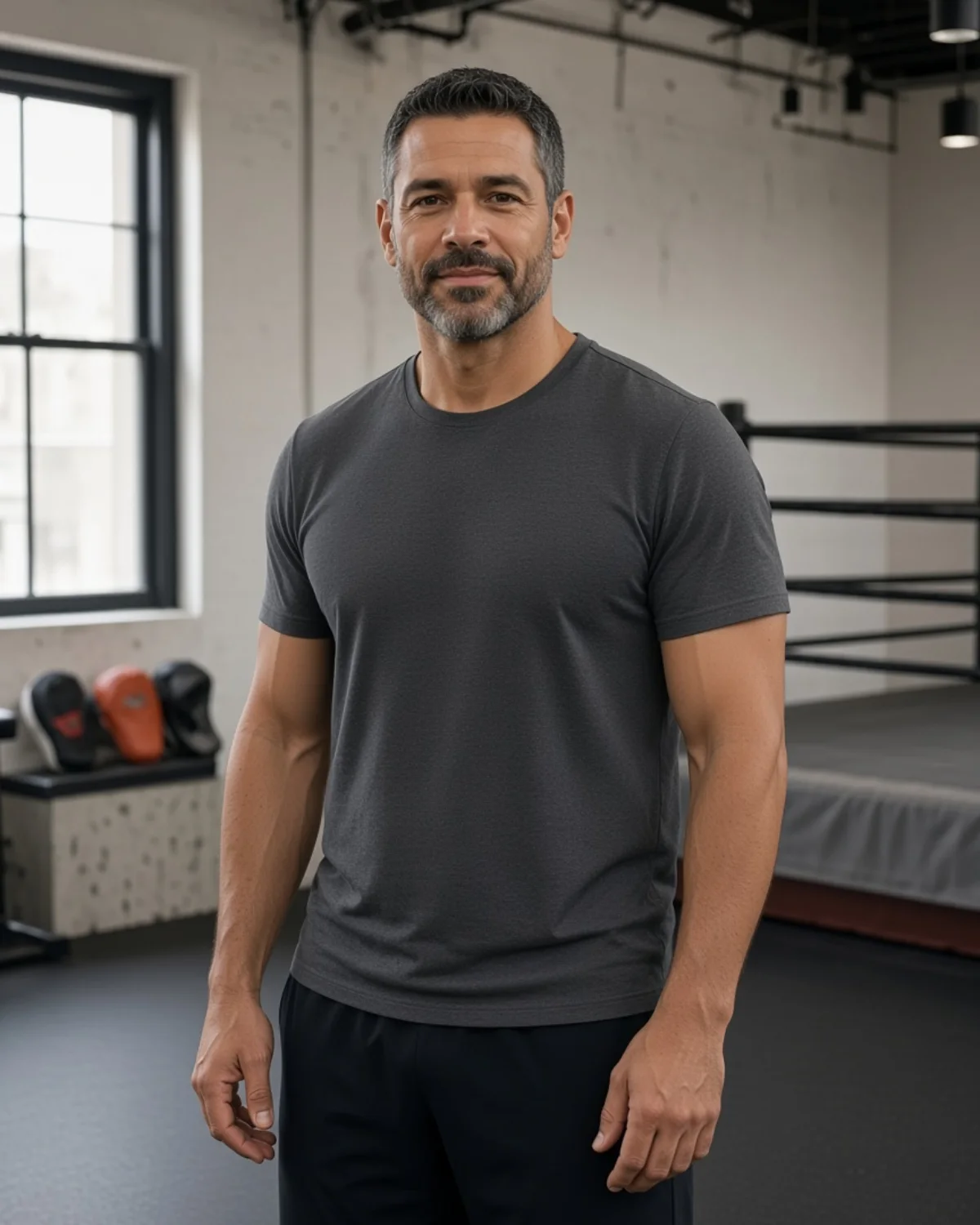
Meet the coach
Jesse leads boxing instruction at RingCenTraining with an emphasis on fundamentals, technique, movement, defense, and structured practice. His dedicated profile explains how he teaches beginners, works with experienced trainees, and organizes private and group instruction.
Meet Coach Jesse RodriguezRequest a session
Share your experience level, preferred training format, and requested time. A session exists only after RingCenTraining confirms availability.