Boxing Fitness Training
Boxing fitness uses the working parts of boxing—stance, movement, combinations, bag rounds, and timed intervals—to create a structured training session. Technique still matters. Throwing more punches is not useful if balance, guard, and control disappear as the round continues.
Sessions can be appropriate for people who are new to boxing as well as participants with experience. New clients may use shorter combinations and more instruction between rounds. More experienced clients can work at a faster pace or use more complex movement while keeping the same technical goal.
How a Boxing Fitness Session Is Structured
A session may begin with mobility, stance work, and controlled shadowboxing. The main work can include movement drills, combination practice, heavy bag rounds, and boxing-specific conditioning. Rest periods and work intervals can be adjusted to the session plan and the participant’s current ability.
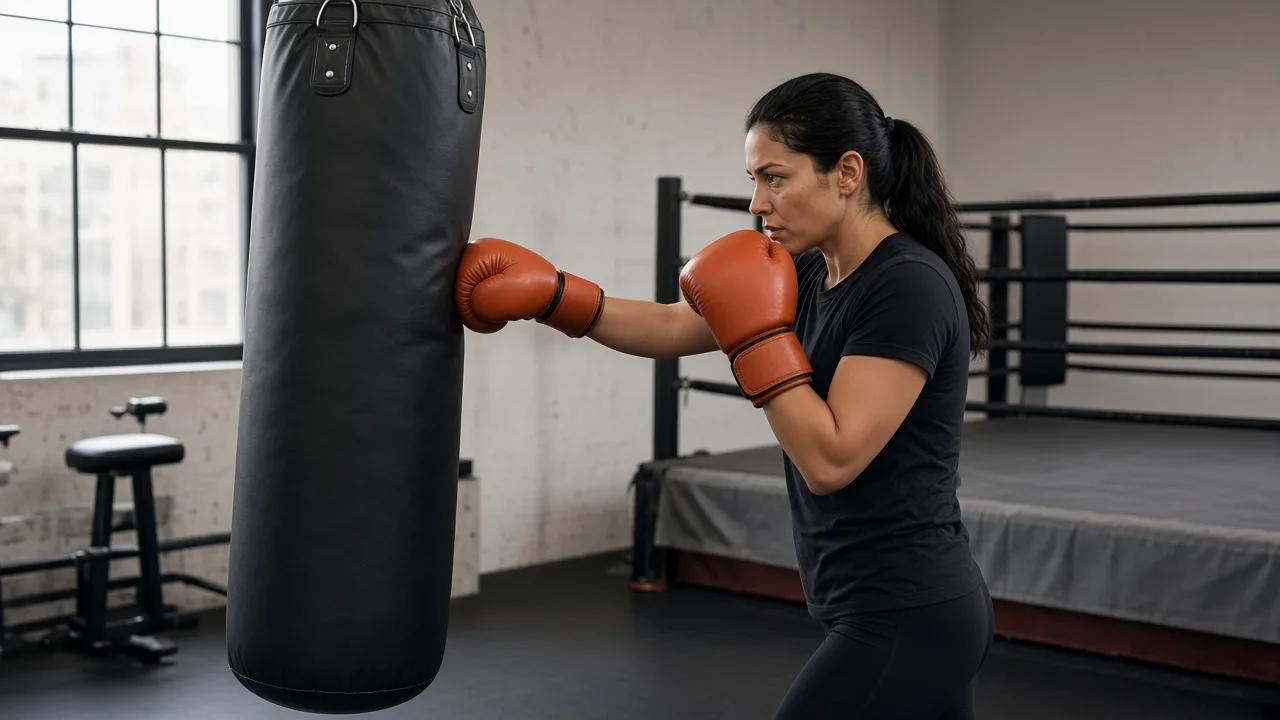
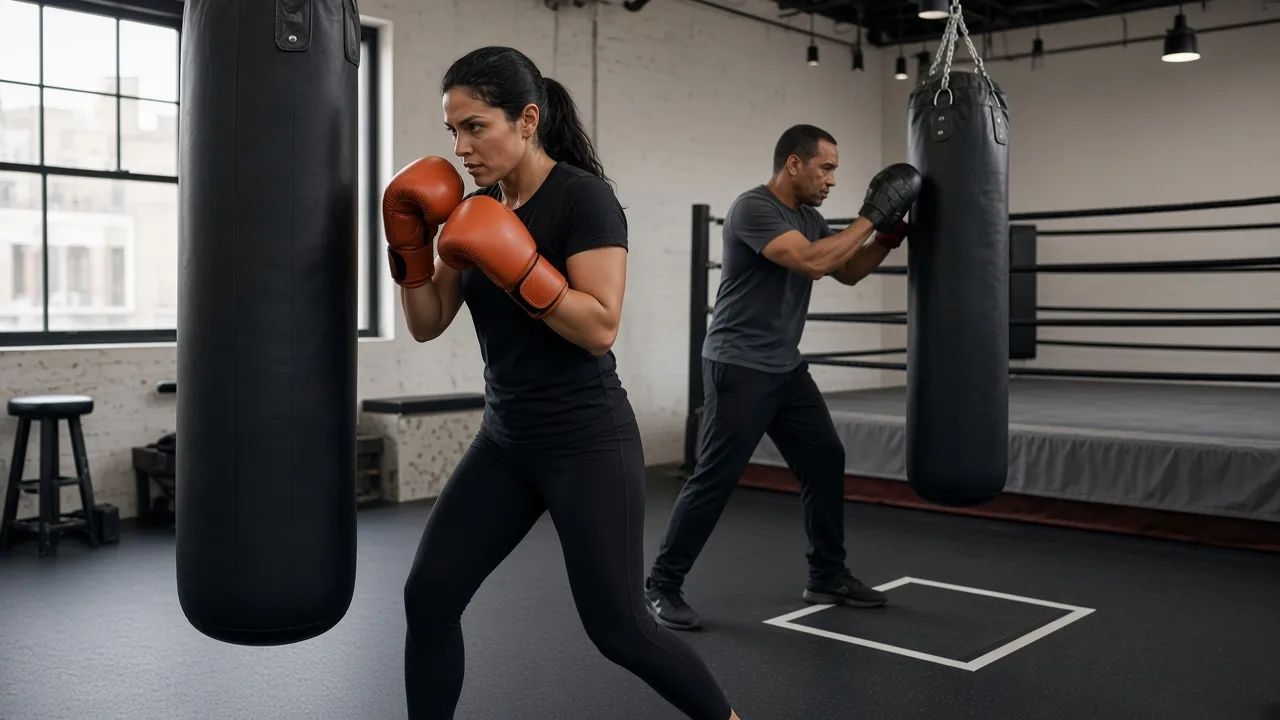
Technique Warm-Up
Prepare with stance, guard, footwork, and controlled shadowboxing instead of rushing directly into hard rounds.
Combination Practice
Repeat short punch sequences, then add movement or defensive actions when the mechanics remain stable.
Bag Work
Use the heavy bag for range, accuracy, pacing, and sustained combinations—not only power.
Boxing Conditioning
Work through timed intervals that may combine punching, movement, and simple conditioning drills.
Movement, Coordination, and Cardiovascular Work
Boxing asks the hands and feet to work together while you maintain posture and awareness. A round may require you to step into range, complete a combination, move away, and reset before the next repetition. That coordination challenge is one reason boxing-based conditioning feels different from machine-based cardio.
Cardiovascular work comes from repeated rounds and active recovery, but the session is not built around a promised calorie count, weight-loss target, or medical outcome. The practical aim is to complete useful boxing work at a pace you can control.
Choosing the Right Experience Level
If you have no boxing experience, start with basic punches and movement before increasing speed. If you already know the fundamentals, the same session can emphasize combination flow, footwork between exchanges, or maintaining technique under longer rounds.
Clients who want more detailed technical correction may prefer private boxing training. Those who enjoy a shared class structure can ask about group boxing training.